SEO in 2026 means being found on Google AND being cited by AI. B2B companies that optimize only for Google are now invisible in the first half of their buyer's research journey.
If your brand doesn't appear when a buyer asks ChatGPT, Perplexity, or Google's AI Mode whether you're worth considering, you've already lost the comparison. No impression counted. No click recorded. The buyer formed a preference without your website ever being visited.
The discipline of optimizing for AI-generated answers is now called Generative Engine Optimization (GEO). It runs parallel to traditional SEO, not replacing it, but extending your visibility into the AI layer of modern search. We covered the new rules of B2B search in depth in our earlier analysis; this guide is the tactical companion: how to measure your current AI citation position and systematically improve it.
How do you know if your brand is currently appearing in AI-generated answers?
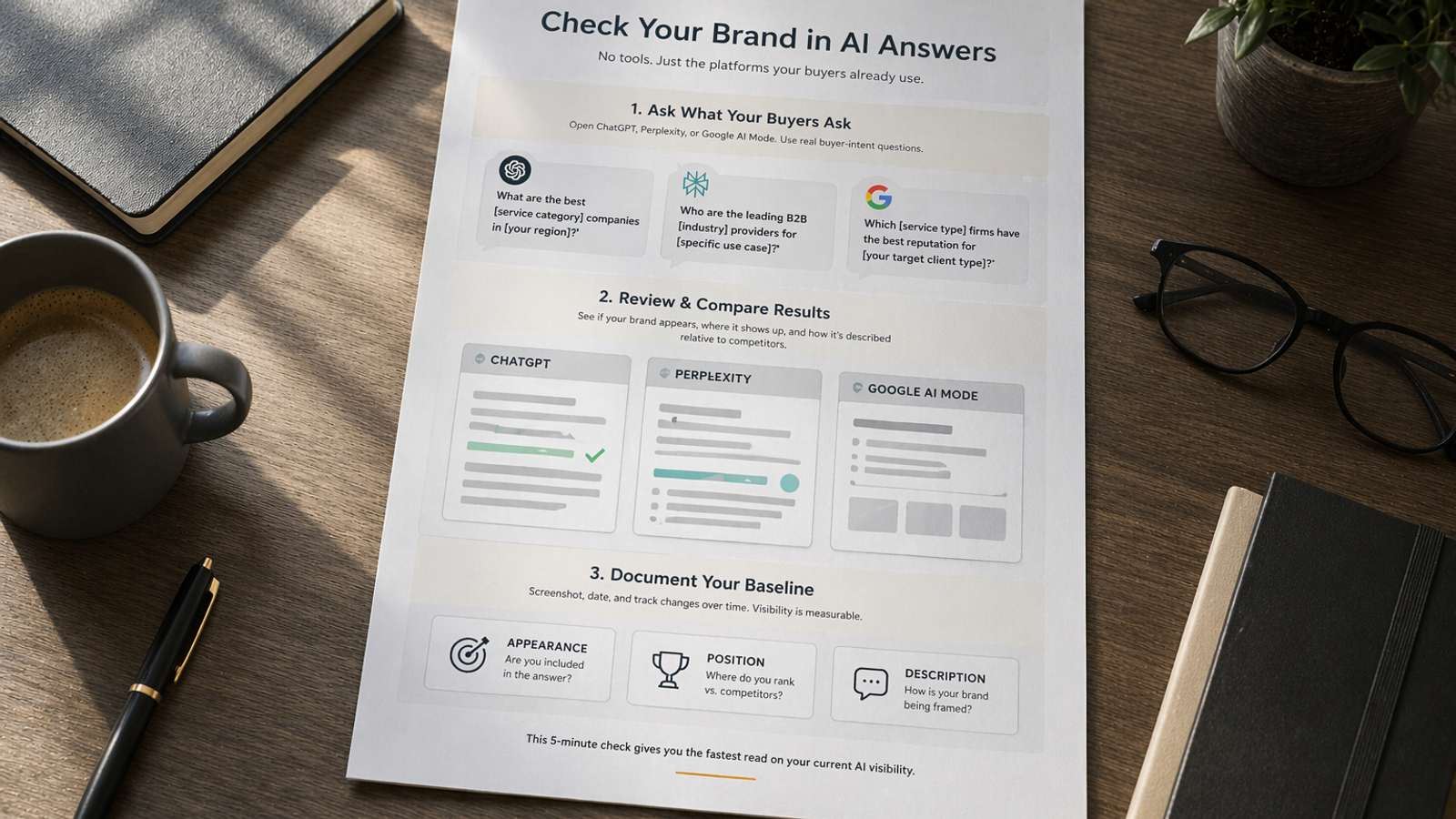
The quickest check requires no tools. Open ChatGPT or Perplexity. Type the questions your buyers actually ask:
- "What are the best [your service category] companies in [your region]?"
- "Who are the leading B2B [your industry] providers for [specific use case]?"
- "Which [service type] firms have the best reputation for [your target client type]?"
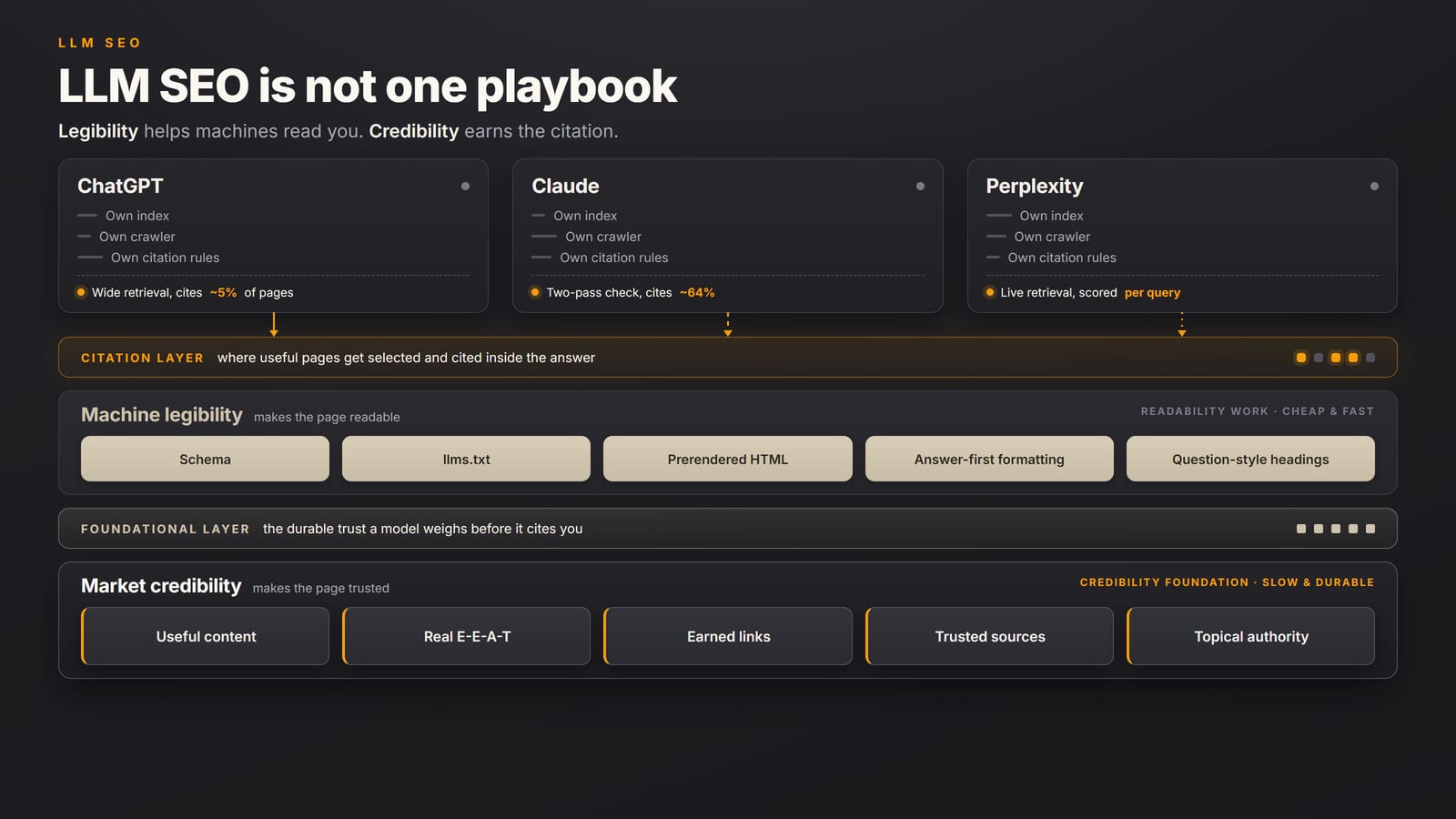
Note three things: whether your brand appears at all, where you appear relative to competitors, and how you're described when you do appear. Run this across ChatGPT, Perplexity, and Google AI Mode, since each draws from different data sources and updates at different frequencies. A brand prominent on Perplexity may be absent on ChatGPT entirely.
Screenshot and date your results. This is your baseline. Without it, you have no way to know whether your optimization work is moving the needle.
What tools can B2B companies use to track their AI search visibility in 2026?
The tooling landscape is early but maturing. Three platforms are worth knowing:
SEMrush AI visibility toolkit
The most practical starting point for B2B companies already on SEMrush. The toolkit includes an AI Visibility Score (0–100), Mentions tracking, Share of Voice vs. up to 10 competitors across ChatGPT/Gemini/Perplexity, Brand Performance (sentiment framing), Prompt Tracking for specific buyer-intent queries, and an AI Site Audit that flags technical crawler access issues.
Honest assessment: strong for trend tracking and competitive benchmarking, but not real-time. It reflects AI behavior at its last crawl, typically with a one-to-two-week lag. Usable baselines for a company starting from scratch appear within two to four weeks of consistent use.
Profound and Searchable
Profound offers deeper LLM monitoring for brands tracking AI visibility across a broader set of language models, and is better suited for companies with significant existing brand awareness. Searchable provides conversational AI monitoring with a simpler interface. Both work best as complements to SEMrush, not replacements.
Manual prompt audit (non-negotiable)
No tool replaces a monthly manual audit. Define 10–15 queries your ideal buyer would ask, run them across all three platforms, and document the results. Automated tools miss prompt variations and emerging competitor positioning shifts that only a human reading the output will catch.
How should website content be structured so AI platforms extract and cite it?
AI platforms prioritize content structured for extraction, meaning content they can pull, verify, and cite with confidence. Four principles matter most:
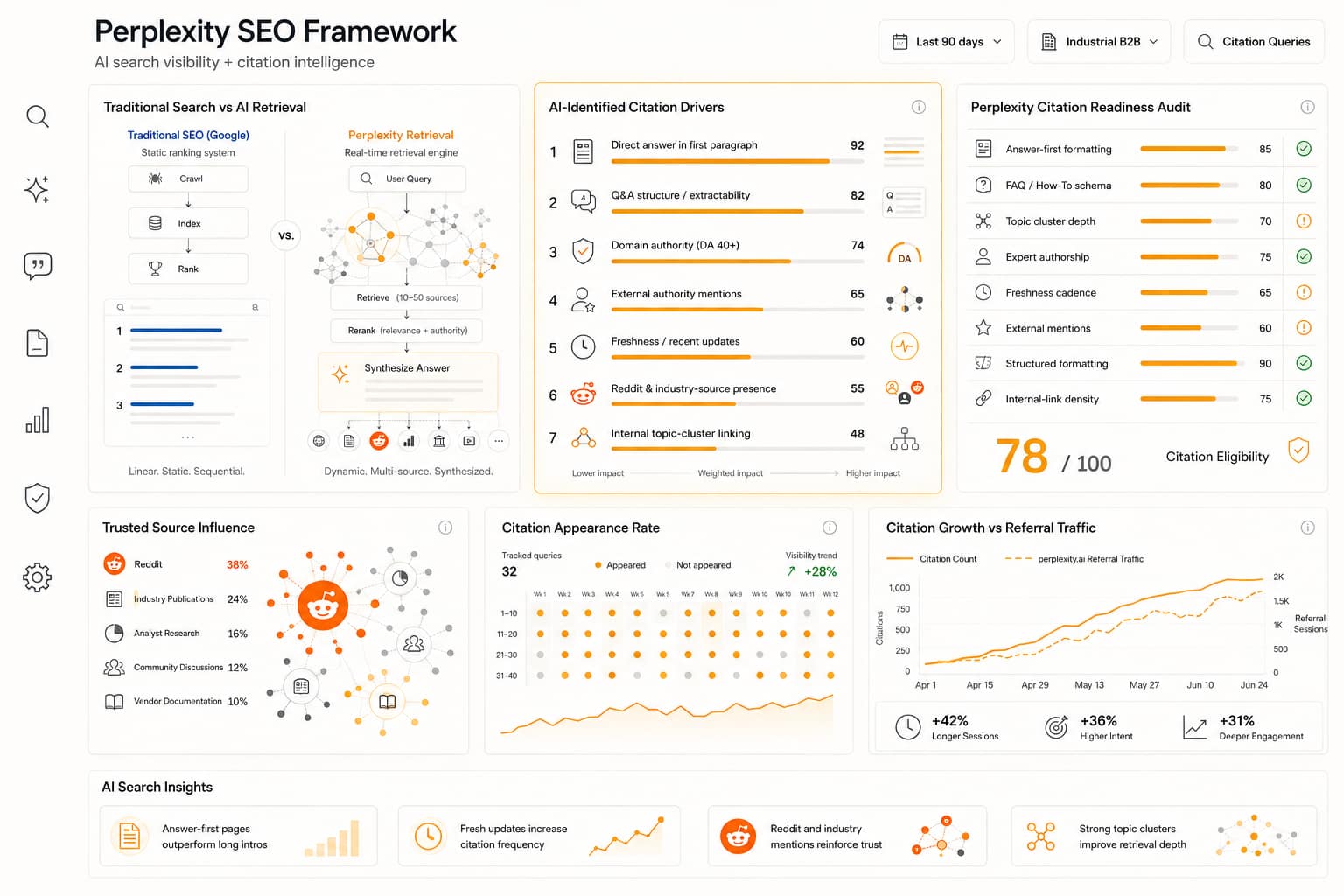
- Answer first, always. Lead every major section with the direct answer. If the conclusion is buried in paragraph four after three paragraphs of context-setting, it won't get cited.
- Question-based headings. Structure H2s as the questions your buyers actually ask. "How much does B2B SEO cost?" as a heading is more citable than "Our Pricing Philosophy." Every H2 in this article follows this format, and that is not by accident.
- Standalone factual paragraphs. Each paragraph should be a complete, citable unit of information. If a paragraph requires prior context to make sense, AI platforms will skip it.
- Defined entities. Be explicit about who you are, what you do, and where you operate, in on-page copy rather than just metadata. Clear entity definitions allow AI to confidently recommend you in location-specific and sector-specific queries.
What technical blockers stop AI crawlers from accessing your website, and how do you fix them?
Many B2B companies have accidentally blocked AI crawlers entirely and have no idea. Check these three things immediately:
robots.txt
Visit yourdomain.com/robots.txt. Look for lines disallowing GPTBot (OpenAI), PerplexityBot, ClaudeBot / anthropic-ai, Googlebot-Extended, or Bytespider. If any are blocked, either individually or under a broad Disallow: / directive, AI platforms cannot read your site. Add explicit Allow rules or remove the blocking directives.
Schema and structured data
Missing or incorrect structured data is one of the most common technical gaps in AI visibility. At minimum every B2B site needs: Organization schema, Website schema, Article or BlogPosting schema on content pages, FAQ schema on pages with question-based headings, and LocalBusiness schema for multi-location businesses. Validate via Google's Rich Results Test, because what it can't parse, AI platforms generally can't use either.
llms.txt
An emerging convention: a plain-text file at yourdomain.com/llms.txt that explicitly tells LLMs what your site does, who it serves, and which content is most relevant for AI purposes. Not yet a formal standard, but several major AI platforms read it. Creating a basic version takes 15 minutes and has meaningful long-term upside.
Which off-site authority signals does AI use to decide whether to trust and recommend your brand?
Your website is one input among many. Brands that rank consistently in AI responses have corroborating evidence of authority from external sources:
- Industry publication mentions. A brand cited in authoritative trade publications or recognized industry blogs carries more third-party validation than a brand that only talks about itself on its own website. Earned mentions through contributed articles, expert quotes, and research citations build the external signal base AI uses to verify your claims.
- LinkedIn presence. All three major AI platforms draw from LinkedIn data for professional services companies. A founder with a consistent, on-pillar posting history amplifies the authority signal for the brand as a recognized entity.
- Third-party review platforms. Google reviews, G2, Clutch, and Trustpilot entries, even a modest number, serve as external corroboration that your company exists, operates, and delivers on its stated service. AI platforms treat verified review presence as a trust signal.
- Consistent brand description across touchpoints. If your website says "B2B revenue strategy firm," your LinkedIn says "growth consultancy," and your Google Business Profile says "marketing agency," AI platforms receive conflicting entity signals and resolve the ambiguity by reducing mention frequency. Consistent language across every touchpoint is a technical requirement, not a style preference.
How do you build a monthly AI visibility monitoring system without spending hours on manual checks?
The goal is a repeatable 60-minute audit, run on the first Monday of every month:
- Manual prompt audit (30 min): Run your 10–15 predefined prompts across ChatGPT, Perplexity, and Google AI Mode. Document whether you appear, your position vs. competitors, and how you're described. Log in a dated spreadsheet.
- SEMrush dashboard review (15 min): Check AI Visibility Score trend, Mentions count, and Share of Voice vs. competitors. Flag significant shifts in brand description framing or competitor positioning.
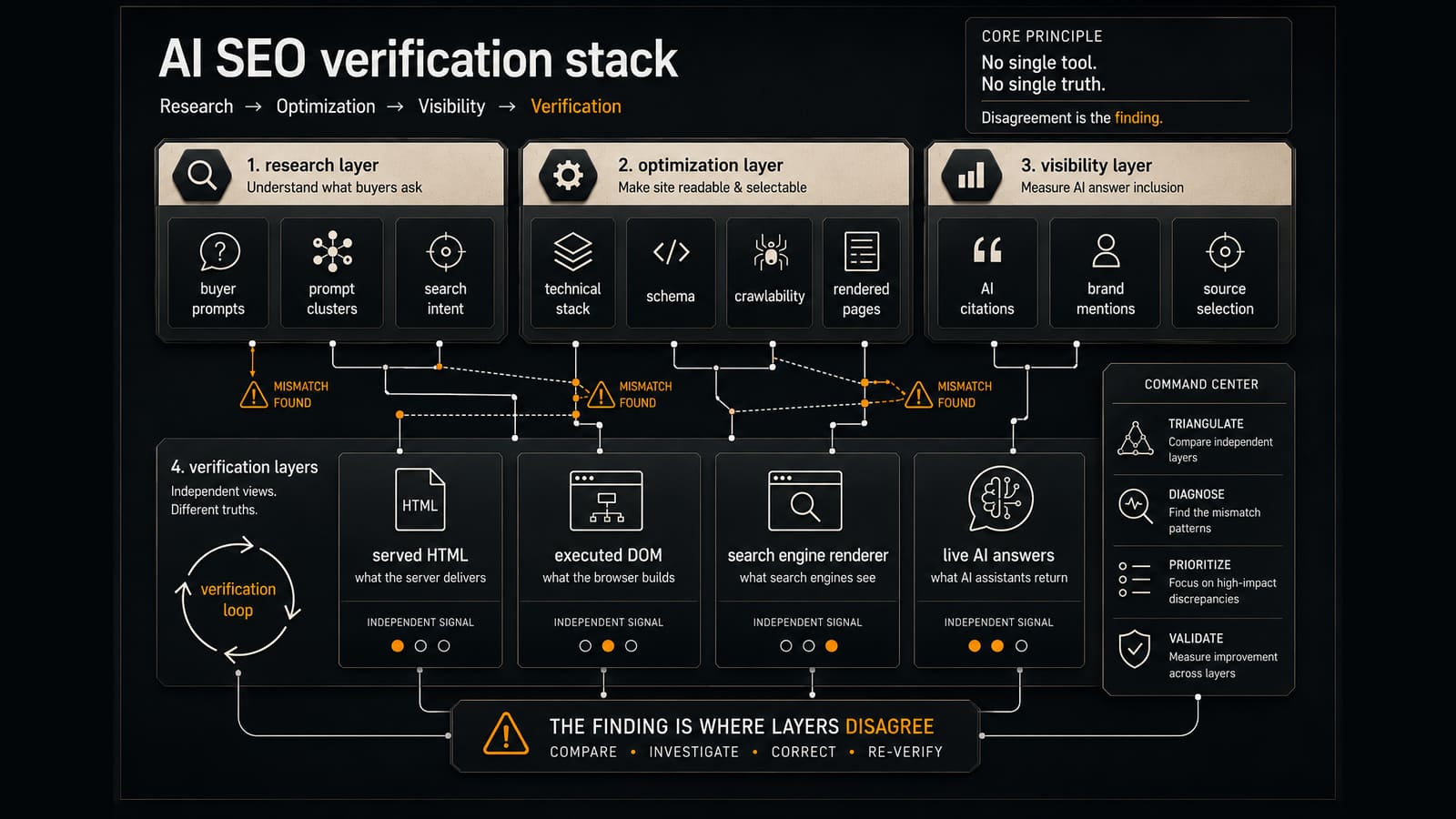
- Technical health check (10 min): Re-run the AI Site Audit. Confirm robots.txt still correctly allows AI crawlers, since this breaks when developers update the file without knowing what GPTBot is. Verify newly published pages have correct schema.
- Content and entity review (5 min): Confirm organization schema, llms.txt, and key service page descriptions are consistent with current brand positioning. Update if a new service has launched or a new location opened.
From the field: A B2B industrial services company I worked with lost 70% of its AI citation volume in six weeks, not from any content change, but because a developer update to robots.txt blocked GPTBot as a side effect of a spam-blocking change. The fix was a three-line edit. The lesson: your AI search visibility can be undone by a commit pushed on a Tuesday afternoon by someone who didn't know what GPTBot was.
Key takeaways
- Your AI citation baseline starts with a manual check across ChatGPT, Perplexity, and Google AI Mode. Run it today and screenshot the results.
- SEMrush's AI Visibility Toolkit provides the most practical benchmark data for B2B companies starting from scratch; expect usable baselines within two to four weeks.
- Answer-first paragraphs, question-based H2s, and standalone factual writing are the three content changes with the highest impact on AI citation probability.
- Check your robots.txt now. Many B2B companies have accidentally blocked GPTBot, PerplexityBot, and ClaudeBot entirely.
- Off-site authority, including publication mentions, LinkedIn presence, and consistent brand entity definition across all platforms, is as important as on-page content for AI trust and recommendation.
The bottom line
B2B companies can measure AI citation visibility using SEMrush's AI Visibility Toolkit, specifically the AI Visibility Score (0–100), Share of Voice across ChatGPT, Gemini, and Perplexity, and Prompt Tracking for buyer-intent queries, combined with monthly manual prompt audits and technical site health checks for AI crawler access. Improving visibility requires answer-first content structure, question-based H2 headings, correct structured data markup, robots.txt access for AI crawlers (GPTBot, PerplexityBot, ClaudeBot), and off-site authority signals including publication mentions, LinkedIn presence, and third-party reviews. A monthly 60-minute audit system is sufficient for most B2B companies to track progress and respond to findings.
AI citation visibility is part of the revenue infrastructure that connects your brand to buyers before they ever visit your website. Most B2B companies don't know where they stand in AI search, and measuring it doesn't require an agency. Use our AI Visibility Audit to benchmark your brand across the seven factors that determine whether ChatGPT, Perplexity, and Google AI Mode recommend you or your competitors.