The AI SEO tools worth evaluating in 2026 do three different jobs: researching what buyers actually ask AI, optimizing your site so those engines can read and choose you, and measuring whether they cite you. The tool you pick matters less than two things most buyers skip: knowing how your own site is built and what you are trying to measure, and verifying what any tool reports before you act on it. Every AI SEO tool reads one layer of your site, and on a modern JavaScript site any single layer can be confidently wrong.
The category is loud. Every week a new platform promises to win AI search. Underneath the marketing the useful split is simple. Some tools help you find the questions worth answering. Some help you get chosen. Some tell you where you stand. None is trustworthy alone, because each sees a single slice of a system that has several moving layers.
The three jobs an AI SEO tool can do
Sort every tool by the job it performs before you compare features. There are three, and they run in this order.
- Research: find the prompts and questions your buyers actually ask AI, and where competitors are winning citations, so you optimize for real demand instead of guesses.
- Optimize: make your site something an engine can both read and choose. That spans the content and entities on the page and the technical access underneath it, schema, rendering, indexation, and crawler permissions, because an engine cannot cite a page it cannot read. This is on-page plus answer engine optimization (AEO).
- Measure: track whether AI engines mention or cite your brand, for which prompts, and how you compare to competitors.
Buy for the wrong job and the tool still produces a dashboard full of numbers. The numbers just do not move revenue, because the constraint was in a different job.
The tools, by job
The tools sort into the same three jobs. Take them in that order, because research decides what the other two aim at.
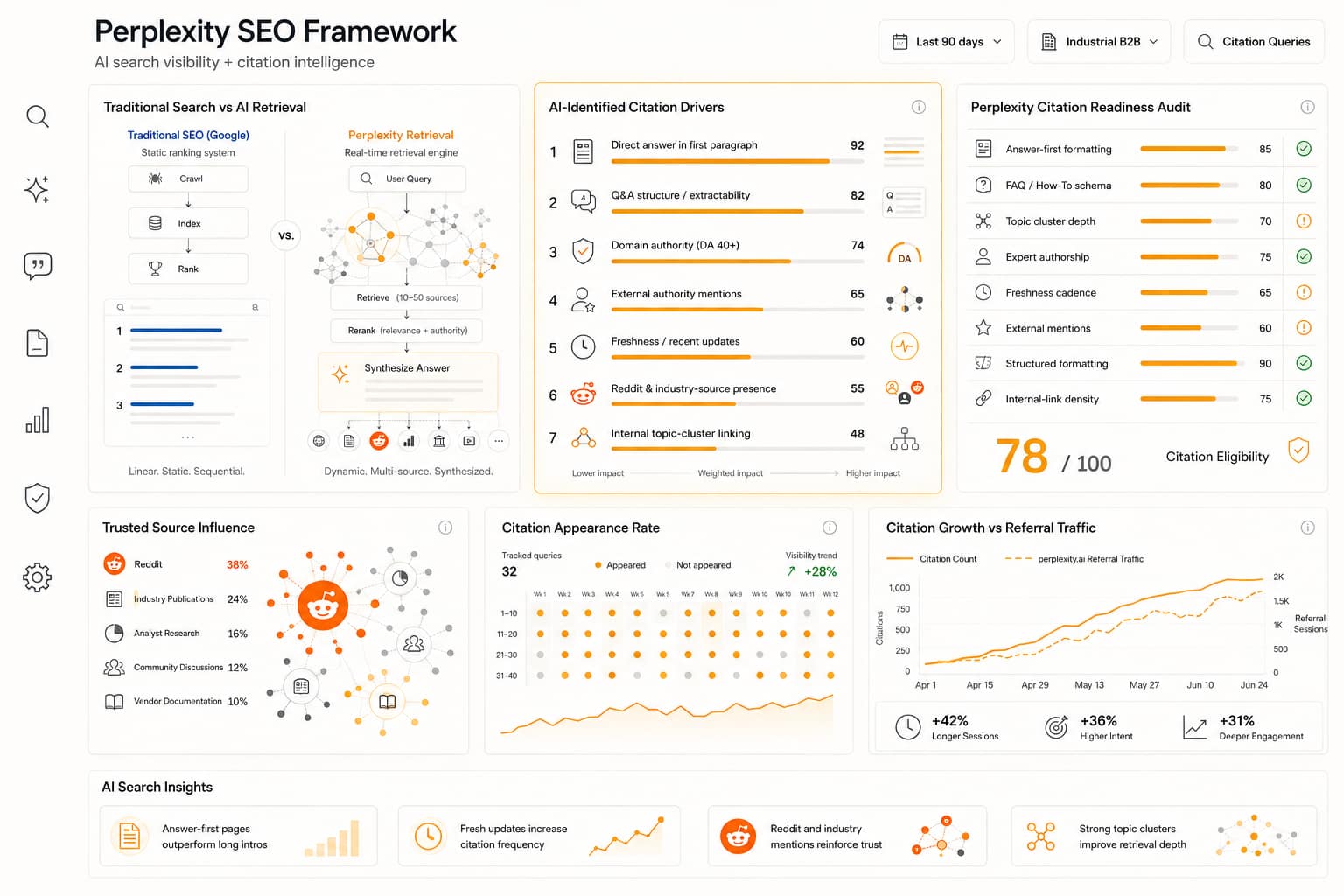
For research, the useful signal is which prompts real buyers type into AI, not the keywords you already rank for. Profound measures real prompt demand at the top end. At the low end you can mine the same signal yourself by running buyer questions across the engines and reading which sources they cite.
For optimize, standalone platforms like AthenaHQ and the optimization layer inside Profound turn a visibility gap into a content brief, and content tools like Writesonic or Quattr score pages against the patterns engines reward. The technical half of the same job uses the stack you may already own: Google Search Console for indexation, a crawler like Screaming Frog or Ahrefs Site Audit, a schema validator, and Google's Rich Results Test, plus llms.txt and clean AI-crawler rules. This is the AI infrastructure layer, and it is where the real gap usually lives, because a page an engine cannot render is a page it cannot cite.
The measure job is the crowded one, and the job most people shop for. Visibility trackers run prompt sets across AI engines on a schedule and report mentions, citations, share of voice, and the sources the engines pulled from. Pricing in this category moves fast, so treat the numbers as directional.
- Enterprise: Profound leads the category and is the platform analysts credit with measuring real prompt demand. Its public plans start at 99 dollars per month, the popular Growth tier is 399, and full enterprise deployments are quoted on a call. Scrunch AI, seoClarity, and AirOps compete for the same budget.
- Mid-market: Peec AI covers ChatGPT, Perplexity, and Google AI Overviews daily with source-level attribution, starting under roughly 100 dollars per month. Ahrefs Brand Radar fits teams already living in Ahrefs, and Semrush has folded similar tracking into its suite.
- Entry: Otterly.AI is the easiest to start, from 29 dollars per month, with paid tiers at 29, 189, and 489, alongside Searchable, LLMrefs, Geneo, ZipTie, and Rankscale.
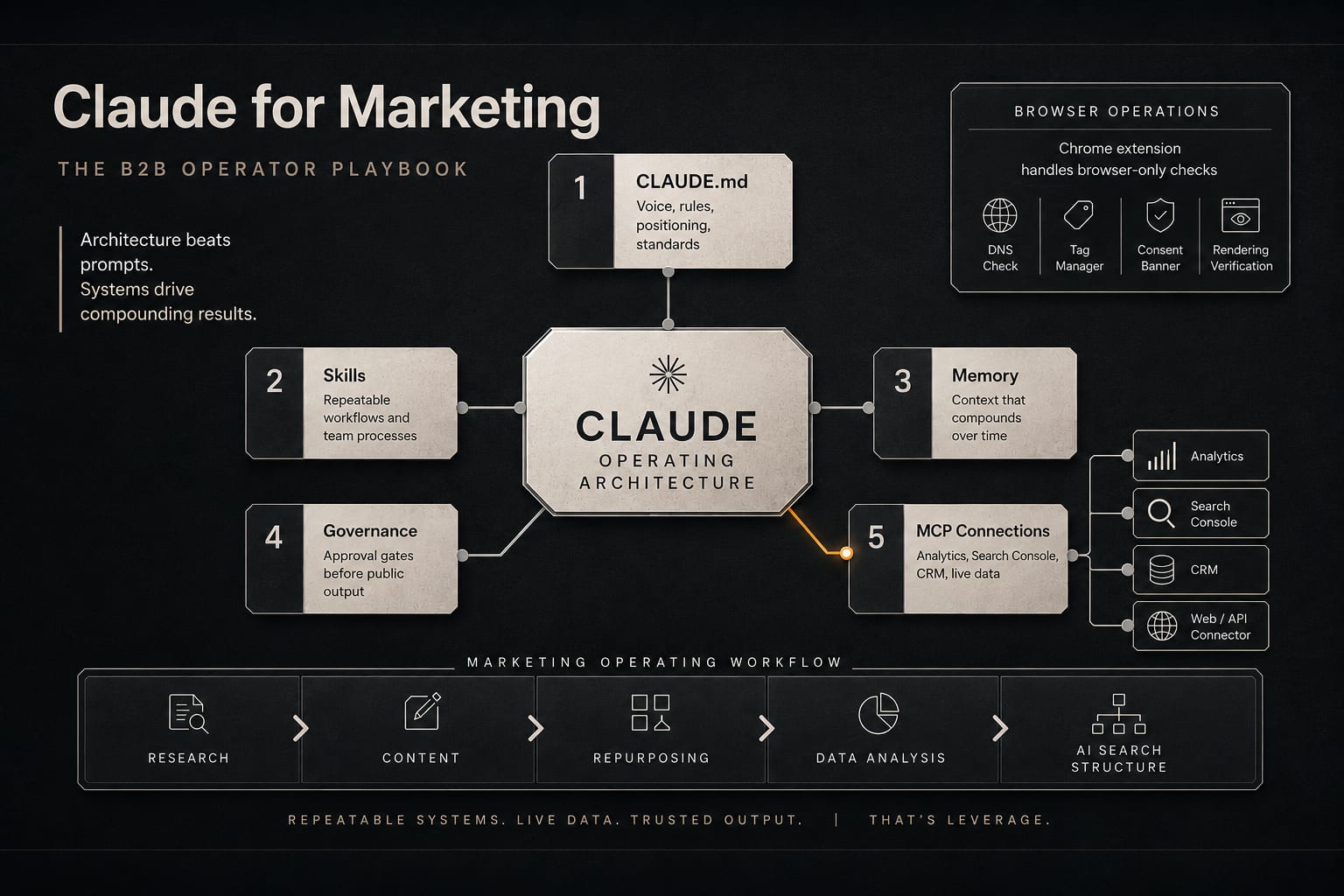
Here is the part the pricing pages will not tell you: most of this you can build yourself. The core loop, run a set of buyer prompts across ChatGPT, Perplexity, and Google AI Overviews, capture who gets cited, verify the technical layers, and track it over time, is a few scripts and a capable AI assistant, not a subscription. We run our own audits this way, on a Claude-driven stack that runs the prompts, checks the rendered page and the schema, and logs the results, with paid trackers reserved for the point where scale makes them worth it. The dashboard is the commodity. The judgment is not.
Why one tool is never enough
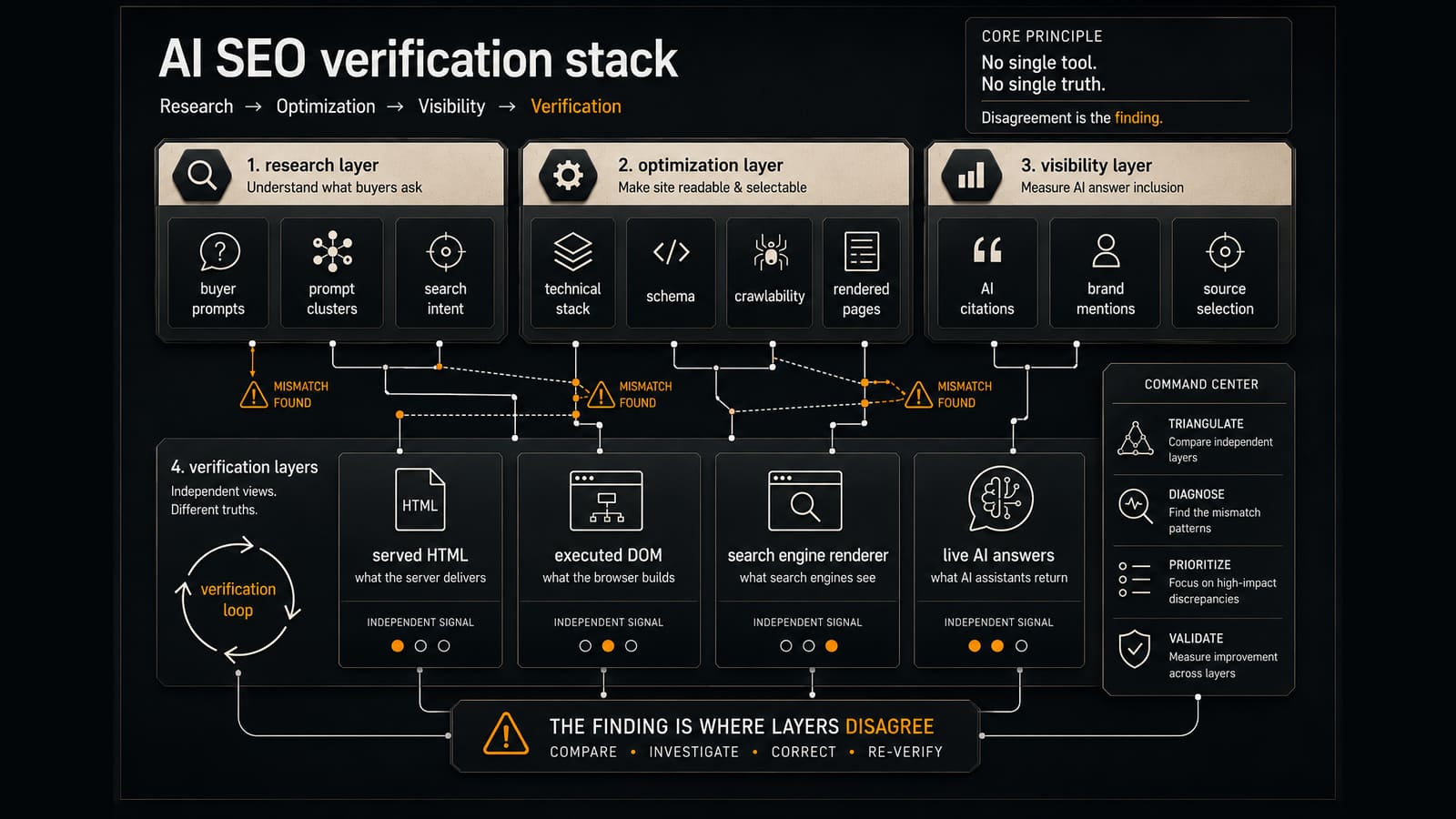
Every tool reads one layer of your site, and the layers can disagree. curl and Screaming Frog read the HTML your server sends. A headless render reads the page after JavaScript runs. Google's Rich Results Test reads what Google's own renderer sees. A visibility tracker reads the live AI answer on the day it ran. Four tools, four layers, and on a JavaScript-heavy site they routinely report four different things.
The error that costs you is counting two tools that read the same layer as two checks. curl and Screaming Frog agreeing is not verification. They both read the served HTML. If that layer is wrong, they are wrong together, with full confidence.
From the field: on one audit, our AI-assisted first pass flagged a site's location pages as copies of the homepage. The finding looked off to us, so before it went anywhere we pulled the suspicious pages and checked them by hand. The rendered pages were clearly unique, and Google's own renderer agreed. The real defect was a hardcoded canonical tag that told Google every page was the homepage, so it folded all 83 into one and indexed none. The served HTML had fooled the first pass. We treated it as a lesson about where AI-assisted audits break, and wired the cross-layer check into our own skill stack so that class of error cannot ship again. It has not since.
So the workflow to run on any load-bearing claim, whatever tools you buy, is to verify across independent layers, never across two tools that read the same one.
- Served HTML: what the server sends before JavaScript runs. curl or Screaming Frog.
- Executed DOM: the page after scripts run. A headless render, checking every canonical tag, not just the first.
- Google's renderer: the Rich Results Test, the checker Google itself trusts.
- The live AI answer: the same buyer prompts run by hand across ChatGPT, Perplexity, and Google AI Overviews. Run each prompt several times on the same engine too, because the answers are non-deterministic. Ask twice and you often get two different lists. One run is a coin flip, not a measurement.
When the layers disagree, the disagreement is the finding. Served says homepage, rendered says unique page, Google's renderer confirms the unique page: that three-way split is the diagnosis, and you only see it by running all three. Every finding then carries a confidence note, three of three or two of three, so a claim nobody could verify is visibly unfinished instead of quietly shipped.
The trap a good tool will still hide
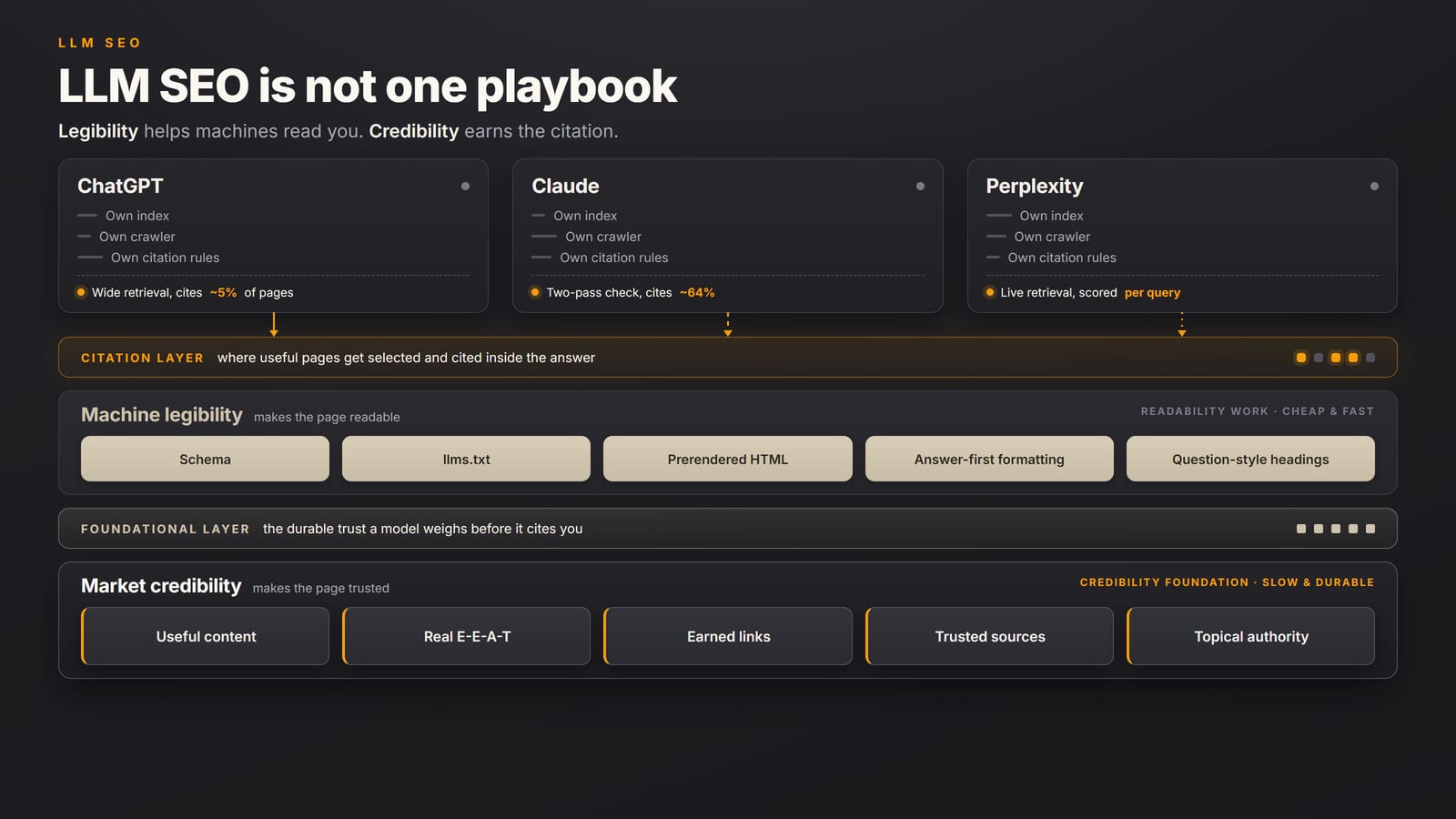
One version of this decides AI visibility directly. A site can inject its structured data with JavaScript. Google renders the page and reads the schema, so a schema checker reports that everything is present and valid. But many AI crawlers do not execute JavaScript, so ChatGPT, Perplexity, and Claude never see that schema. The tool says present. The AI answer behaves as if it is absent. Only checking the served layer against the rendered layer against the live AI answer exposes the gap, and it is a common one.
Know your site before you trust a tool
Before you buy or run anything, get two things straight: how your website is actually built, and what specifically you are trying to measure. A tracker pointed at a server-rendered site and the same tracker pointed at a client-rendered single-page app are reading two different realities, and a number with no clear question behind it is just noise you pay for.
This matters more now that the tools themselves are AI. An AI assistant does not have human judgment or ten years of hands-on SEO experience. It will read a single-layer signal, generalize from one run, and state a one-sided finding with total confidence. That is not a reason to avoid it. It is a reason to keep an experienced operator between the tool and the decision. Relying on an AI audit you cannot check yourself is how a confident wrong answer becomes a wrong fix, shipped to a client.
Getting cited is a content problem, not a tool problem
Tracking tells you that you are absent. It does not make you present, and neither does an optimization tool if the page has nothing worth citing.
From the field: in one anonymized batch of equipment dealers, the dealer ChatGPT named first for a buyer prompt had about 150 monthly organic visits. A competitor with roughly 4,700, more than thirty times the search footprint, was absent from the answer. The named pages were readable and exposed clean product and local data. The absent ones gave the model nothing to cite. No tracker would have changed that result, because AI ranks on readability, not popularity.
The content that earns AI citation visibility is the same content that earns it the slow way: first-hand experience, specific numbers, clean structure, and a page an engine can lift a clean answer from. A tool speeds up the diagnosis. It does not replace having something worth citing.
How to evaluate the options
Feature lists look complete by design. Filter on a shorter set of questions.
- Coverage: does it track the engines your buyers actually use? For B2B that means ChatGPT, Perplexity, and Google AI Overviews at minimum.
- Demand realism: does it measure prompts real people ask, or prompts you typed in?
- Attribution: can it show which source drove a mention, so you know what to build more of?
- Diagnosis: does it tell you why you are absent, or only that you are? Most stop at that, and the why lives in a layer the tracker never reads.
- Build or buy: much of the research-and-verify loop can be assembled with a few scripts and an AI assistant. Pay for a tool when it saves real time at your scale, not before.
- Stage fit: match the spend to the stage. A company with no AI presence yet does not need a five-figure contract to learn that.
One principle keeps this honest: growth is infrastructure, not a campaign. A tool is a measurement instrument, and an instrument you never cross-check, run by an AI that has no operator judgment, is a guess with a dashboard on top.
A sequence that matches how the work runs
- Confirm the gap, free to low cost: check indexation in Search Console and run real buyer prompts by hand, several times each, in ChatGPT and Perplexity. This is the first move in our full-stack B2B revenue audit, and the same one the AI Visibility Audit runs.
- Verify the cause across layers: served HTML, executed DOM, Google's renderer. Do not accept a single-tool read on a JavaScript site.
- Fix the foundation: if the site is JavaScript-rendered, server-render or prerender the pages (a server-rendered CMS already passes); correct the schema and canonicals, publish an llms.txt, and rebuild high-intent pages to answer buyer questions directly.
- Measure and optimize: add Otterly, Peec, or Ahrefs Brand Radar to track the lift and find source gaps, or keep running the loop yourself.
- Scale only when AI search is a funded channel: Profound or a peer earns its price at that point, not before.
Key takeaways
- AI SEO tools do three jobs: research the prompts buyers actually ask, optimize your site so engines can read and choose it, and measure whether they cite you. Match the tool to the job.
- Most of the research-and-verify loop you can build yourself with a few scripts and an AI assistant. Pay for a tracker when it saves real time at scale.
- Every tool reads one layer, and AI answers are non-deterministic. Two tools on the same layer are one check, and one run of a prompt is a coin flip. Verify across independent layers and across repeated runs.
- The disagreement between layers is the finding. A tracker tells you that you are absent, not why, because the why lives in a layer it never reads.
- Know how your site is built and what you are measuring first, and keep an experienced operator between an AI audit and the decision. A confident wrong answer becomes a wrong fix.
In summary: in 2026 AI SEO tools do three jobs. Research tools surface the prompts buyers actually ask. Optimization tools and the technical stack, AthenaHQ, Writesonic, Quattr, plus Search Console, a crawler, a schema validator, Google's Rich Results Test, and llms.txt, make your site something an engine can read and choose. Visibility trackers such as Profound, Peec AI, Otterly, Searchable, and Ahrefs Brand Radar measure whether ChatGPT, Perplexity, and Google AI Overviews cite your brand. Most of this loop you can build yourself with a few scripts and an AI assistant, and no tool is trustworthy alone: each reads one layer of a site that has several, AI answers are non-deterministic, and an AI assistant has no operator judgment. The durable workflow is to know how your site is built, decide what you are measuring, then verify every AI-visibility or technical claim across independent layers, served HTML, executed DOM, Google's own renderer, and repeated live AI answers, and treat the disagreement between them as the finding.