
A high-converting equipment dealer website in 2026 does three things most dealer sites don't: it showcases real inventory with pricing and financing context, it gets a buyer from landing page to inquiry in two clicks, and it's structured so both Google and AI platforms treat the dealer as the local authority.
Most dealer websites still function as digital brochures. Equipment pages show spec sheets and a phone number. Navigation buries the quote path five or six clicks deep. Parts and service, where dealers earn 60 to 70% of gross profit, get a single page with a phone number. The result is lost pipeline, invisible aftermarket revenue, and marketing teams making decisions without data.
Six structural problems account for most of the damage. Every one of them is fixable.
Conversion killers
Why do equipment listings show specs but never sell?
The inventory section is the most visited part of most dealer websites. It's also the most neglected.
A typical equipment listing looks like a data sheet: model, serial number, hours, a stock photo pulled from the manufacturer's media library, and a phone number. No pricing context. No monthly lease estimate. No video walkaround. No way to compare two similar units side by side.
A fleet manager evaluating a replacement unit wants to know what it costs per month, what condition it's in, and how it stacks up against the alternative sitting in another dealer's yard. When the listing doesn't answer those questions, the buyer opens a competitor's tab or calls the rental company that does.
What to fix:
- Add pricing or lease estimate ranges to every listing. Even a "starting at" figure with a "request custom quote" button gives the buyer context to move forward.
- Replace stock photos with real images of the actual unit. Add a 60-second video walkaround. Buyers trust what they can see, and real media signals credibility that stock imagery can't match.
- Build a comparison feature so buyers can evaluate two or three units without leaving your site.
- Attach a lead-capture form to every listing, not just a global "Contact Us" page. "Request a quote on this unit" with the machine pre-selected removes friction.
Inventory pages should function like a capable salesperson on the lot: acknowledge what the buyer is looking at, answer the obvious questions, and make the next step clear.
The four elements of an inventory page that converts
- Pricing context. A "starting at" figure or a monthly lease estimate next to a "request custom quote" button. Buyers compare several dealer sites in one session, and a range gives them a reason to engage instead of leaving. It does not mean publishing your margin.
- Real media. Photos of the actual unit, including the undercarriage and the hours meter, plus a short walkaround video. A buyer who has inspected the machine on screen arrives pre-qualified.
- Per-unit lead capture. A form on the listing itself, pre-filled with the model and stock number, so the inquiry lands in the CRM with the machine attached instead of routing through a generic Contact Us page.
- Structured data. Product markup on each listing (name, price or price range, condition, availability) and LocalBusiness markup on the branch page, so search engines and AI systems can connect each unit to a location.
Treat structured data as the condition for rich results and for machines to read a listing cleanly, not as a ranking factor on its own. Product markup without a price or price range is not eligible for Google's product rich results, which matters on call-for-price listings.
How many clicks does it take to get a quote?
On most dealer websites, the answer is five or six. Homepage, equipment category, subcategory, individual listing, contact page, then a generic form that doesn't even reference the machine.
Every click is a drop-off point. Marketing teams know this from e-commerce data, but dealer websites are rarely held to the same UX standard.
What to fix:
- Design a two-to-three click path from any landing page to a quote request. Homepage to category to listing with an embedded form.
- Build dedicated landing pages for every major service line the dealer provides: new equipment sales, used and certified pre-owned, rentals, parts, field service, rebuilds, technology solutions. Most dealers collapse all of this into a single "Services" dropdown with thin pages that say almost nothing.
- Make navigation intuitive for someone who has never visited the site before. A site supervisor on a phone searching for a rental shouldn't need to understand the dealer's internal org chart to find the right page.
The standard here isn't other dealer websites. It's every well-built B2B site the buyer interacts with during their day. If they can configure and lease a truck online in three steps, a six-click path to "tell us what machine you want" feels broken.
Visibility problems
Why are dealers invisible for the searches that actually drive revenue?
When a contractor searches "Cat 320 dealer Phoenix" or "rent excavator near me," the results depend on local SEO signals that most dealer websites haven't invested in.
No location-specific landing pages. No LocalBusiness schema markup. Thin or duplicate content across equipment categories. The dealership might rank for its own name, but it's invisible for the commercial-intent searches where new business originates.
This is where rental aggregators and national platforms take share. They invest heavily in local SEO, structured data, and content depth. A contractor searching "rent skid steer [city]" finds United Rentals and Sunbelt before the local dealer with 40 units in the yard.
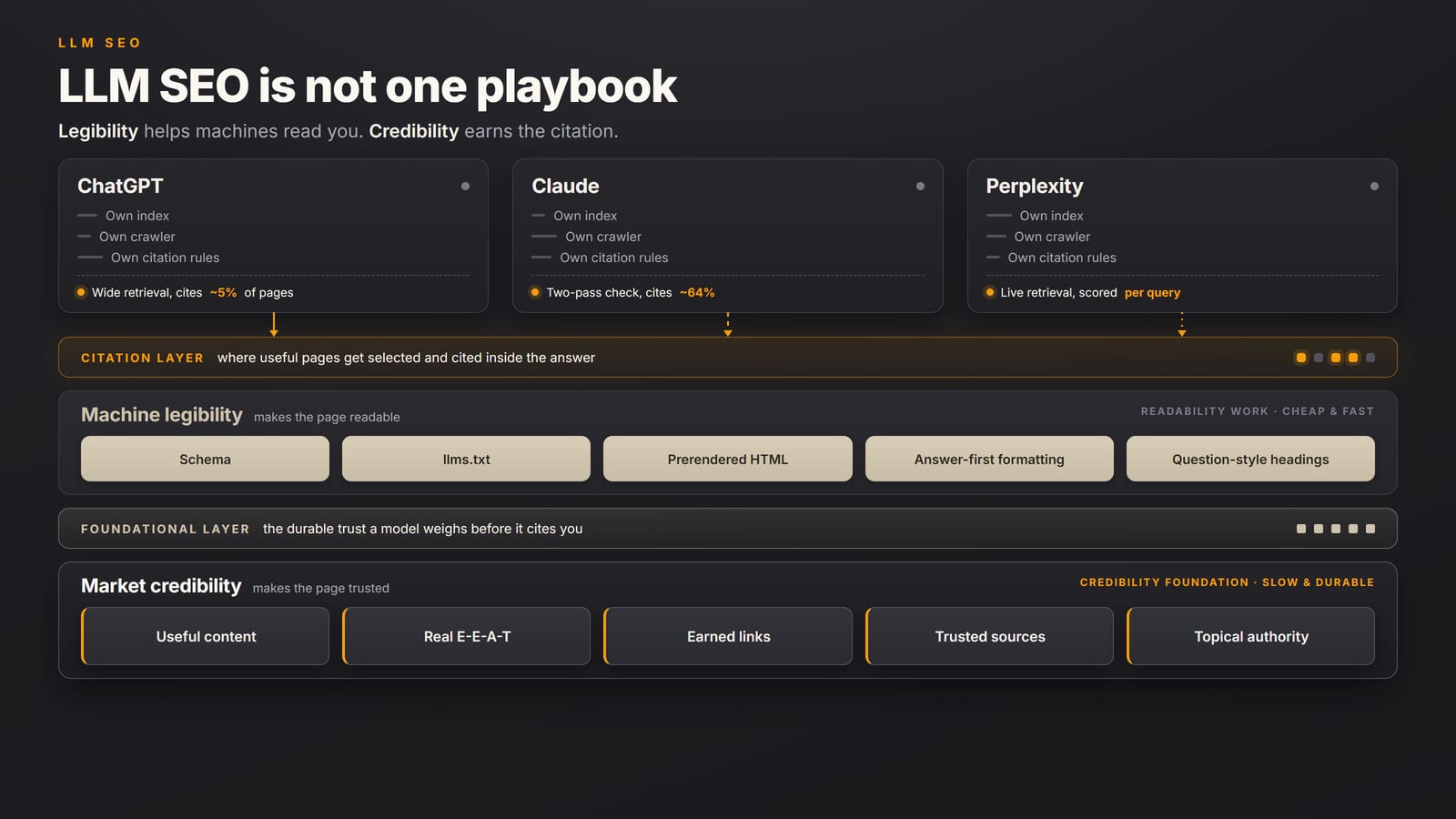
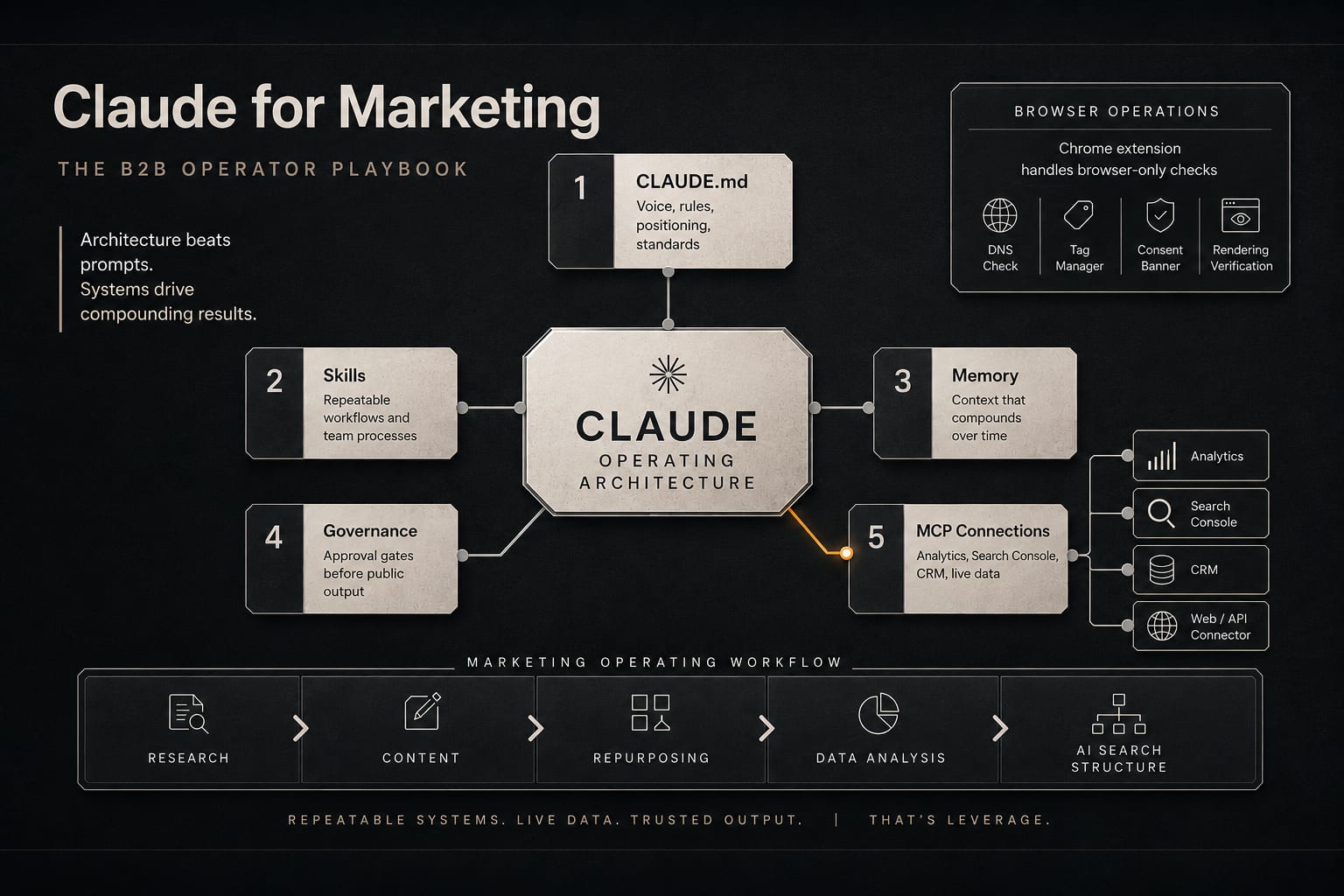
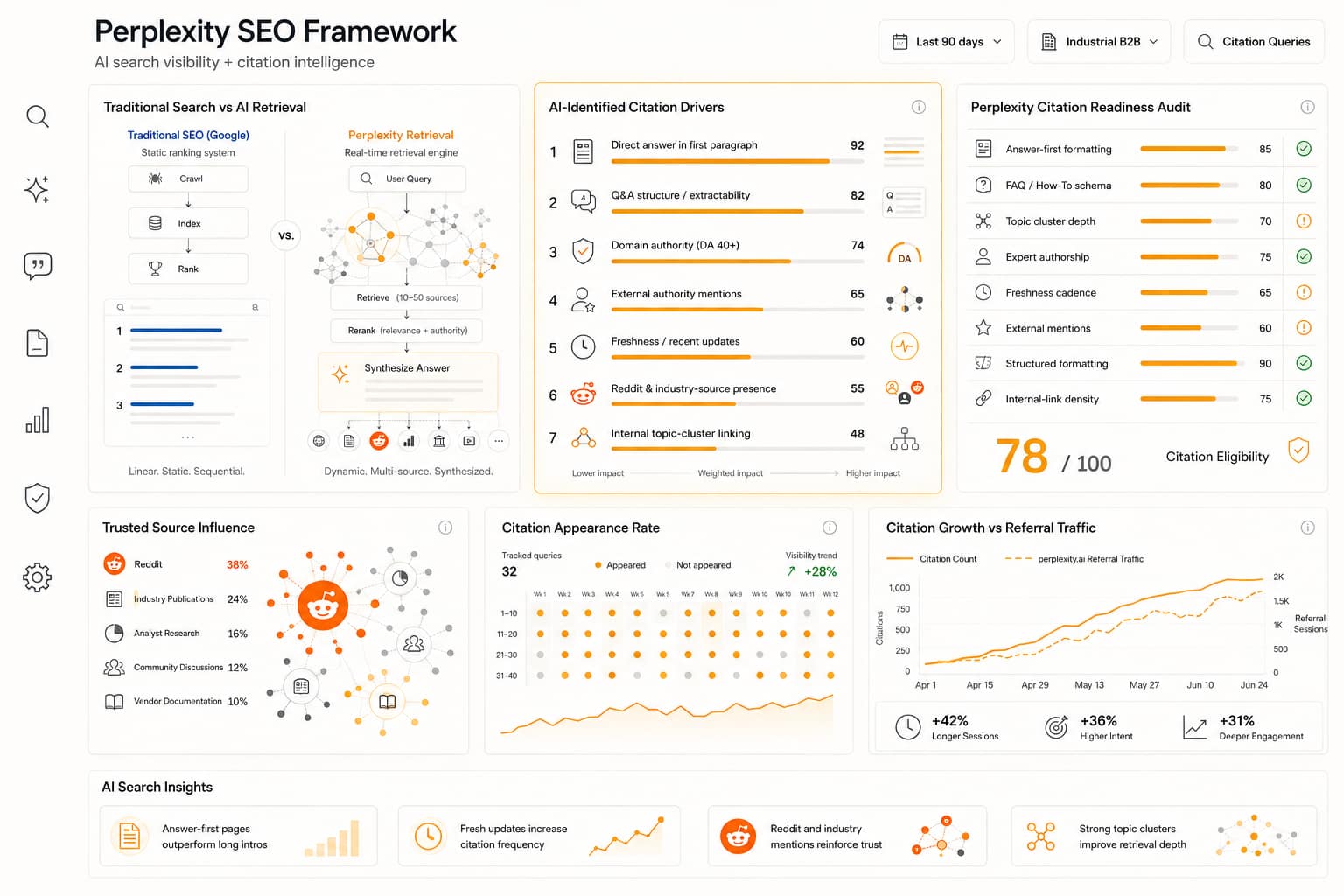
We covered the mechanics of how AI search visibility works in our breakdown of the new rules of B2B search. The same principles apply here. AI platforms like ChatGPT and Perplexity are increasingly answering equipment-related queries directly. If the dealer's content isn't structured for extraction, it won't get cited. And as we outlined in our guide to measuring AI citation visibility, tracking whether your brand appears in those answers is now a measurable KPI.
What to fix:
- Build location-specific landing pages for every branch with unique, locally relevant content.
- Implement LocalBusiness structured data with accurate name, address, and phone for each location.
- Claim and fully optimize your Google Business Profile with real photos, regular posts, and Q&A.
- Ensure NAP consistency (name, address, phone) across all business directories and listing platforms: Google, Bing Places, Yelp, industry-specific directories, and manufacturer dealer locators. Inconsistent NAP data across listings is one of the most common local SEO penalties, and most dealers have never audited theirs.
- Create equipment category pages with original descriptions, not copy-pasted manufacturer specs.
What most dealer marketing teams underestimate about authority
Search visibility, both traditional and AI-powered, depends on more than on-page optimization. Two areas where dealer marketing teams consistently underinvest: trust signals and technical SEO.
Trust signals and authority building. Most dealer websites have zero backlink strategy. No PR outreach. No industry publication features. No partnerships with trade media. Google and AI platforms both use off-site authority signals to determine how much to trust and recommend a brand. A dealer with mentions in Equipment World, ForConstructionPros, or a regional business journal carries more weight than one with no external footprint. As we explored in our piece on the four layers of search visibility, each optimization layer (SEO, AEO, GEO, and AIO) rewards authority signals differently.
Technical SEO fundamentals. Schema markup (FAQ, Product, LocalBusiness), mobile optimization, and page speed aren't optional anymore. Google's data shows 53% of mobile users abandon pages that take over three seconds to load. Dealer sites with uncompressed 4MB equipment hero images fail this test on every page. Field buyers and supervisors search from phones on job sites with uneven connectivity. If the page doesn't load fast, they leave before seeing a single listing.
What to fix:
- Start a link-building and PR outreach program. Even quarterly press releases and trade publication contributions build domain authority over time.
- Implement FAQ schema on service pages and Product schema on equipment listings.
- Compress all images to WebP format under 200KB. Lazy-load below-the-fold content. Target a Largest Contentful Paint under 2.5 seconds.
- Test the site on a phone with a throttled connection, not on a desktop with office Wi-Fi.
Operational gaps
Why is your highest-margin revenue invisible online?
Dealers earn 60 to 70% of gross profit from parts and service. The website should reflect that.
Parts. Heavy equipment catalogs contain millions of part numbers. Maintaining a full parts catalog on a dealer website isn't realistic for most operations, which is why manufacturers handle it on their end. But that doesn't mean the dealer site should have zero parts presence. A simple parts request form and a curated list of a few hundred best-selling items, organized by machine model (filters, undercarriage kits, wear parts, fluid analysis kits), captures search traffic that would otherwise land on the manufacturer or a third-party reseller.
Service. This is where most dealer websites leave the most on the table, because the fix is straightforward and the payoff is significant.
A typical dealer website has one generic "Service" page. Maybe two if rentals get their own section. But the actual service offering at most equipment dealers spans 20 to 30 distinct services that the majority of equipment owners will need at some point: preventive maintenance programs, undercarriage inspection and replacement, engine and powertrain rebuilds, hydraulic system repair, ground-engaging tool replacement, field service and mobile repair, component exchange programs, machine control and GPS installation, telematics setup, fluid analysis programs, cooling system service, electrical and diagnostic troubleshooting, weld and fabrication repair, painting and body work, annual DOT inspections for on-road units, and winter/summer seasonal prep packages.
Each of these is a search query that a fleet manager or owner-operator is actively typing into Google. "Hydraulic hose repair near me." "Cat undercarriage replacement [city]." "Heavy equipment DOT inspection." When the dealer has no dedicated page for that service, the search result goes to a competitor or an independent shop that does.
Building 20 to 30 dedicated service pages is a realistic project for any marketing team. Each page needs a clear description of the service, which equipment types it applies to, typical turnaround time, and a scheduling form. This isn't a content factory exercise. It's documenting what the service department already does every day and making it findable.
Machine inspections and maintenance content. Inspection reports, maintenance guides, and operational best practices should be on the dealer's website. This content does three things: it captures search traffic from operators and fleet managers looking for answers, it builds E-E-A-T authority that strengthens the entire domain's search performance, and it keeps customers in the dealer's ecosystem between transactions.
What to fix:
- Add a parts request form with a curated catalog of best-selling parts and kits organized by machine model.
- Build dedicated landing pages for each of the dealer's 20 to 30 core service offerings, not one page per department.
- Include equipment applicability, typical turnaround, and a scheduling form on every service page.
- Publish machine inspection information, maintenance schedules, and operational guides as evergreen content that keeps customers in the dealer's ecosystem between purchases.
How are you making marketing decisions without tracking data?
Most dealer marketing teams are working with incomplete information. Some have a basic analytics tag installed but no event tracking configured. Others are running paid campaigns without UTM parameters, which means they can't trace a lead back to the campaign that generated it.
Common gaps:
- No call tracking, so phone leads (often the majority of dealer inquiries) aren't attributed to a source
- No UTM discipline on paid campaigns, email sends, or social links
- Form submissions tracked as page views instead of conversion events
- No goals or key events configured, so there's no conversion rate to optimize against
Without this data, marketing budget allocation is a guess. The PPC campaign might be driving clicks to equipment pages with no lead-capture form. The top-performing organic landing page might get zero support because nobody knows it's converting.
What to fix:
- Implement call tracking with source attribution on every trackable number.
- Standardize UTM parameters across all campaigns and channels.
- Configure conversion events for every lead action: form submissions, quote requests, phone clicks, chat initiations, service scheduling.
- Build a reporting dashboard that shows cost-per-lead by channel, conversion rate by page, and lead quality by source.
The goal isn't analytics for its own sake. It's giving marketing teams the data they need to make confident decisions about where to invest and what to fix next.
What a modern dealer site actually looks like
A modern dealer site is not a redesign. It is a structural rebuild aimed at the six problems above: every equipment listing gets its own lead-capture form with financing context, pages load fast on mobile, every branch gets a location page, parts and service get dedicated sections with scheduling forms, and navigation is rebuilt around a two-click quote path.
The pattern is consistent across B2B dealer websites: the traffic often exists, but the site's structure prevents it from converting. Fix the revenue infrastructure, and the pipeline follows.
Key takeaways
- Inventory pages should sell, not just list. Pricing context, real media, and per-listing lead capture are baseline requirements.
- Two-to-three clicks from landing to inquiry. Every additional click loses buyers.
- Local SEO, NAP consistency, and authority building determine whether dealers appear in the searches that drive new business, both on Google and in AI platforms.
- Parts and service deserve dedicated digital investment proportional to their profit contribution.
- Machine inspections, maintenance guides, and operational content build authority and capture traffic between transactions.
- Without call tracking, UTM discipline, and configured conversion events, marketing teams can't measure or optimize performance.
The bottom line
Modern B2B equipment dealer websites convert when they combine real inventory media with pricing context, two-click quote paths, location-specific landing pages with structured data, and dedicated service and parts content. Six structural problems account for most lost pipeline at dealer websites: spec-only inventory pages without pricing or lead capture, deep navigation paths, missing local SEO and authority signals, thin service pages, absent parts and inspection content, and incomplete tracking and attribution. Marketing managers and specialists who address these areas improve both human conversion rates and AI citation visibility for their brand.
Not sure your dealer website is pulling its weight? Request a free website audit and we'll identify the three highest-leverage structural changes for your site.